Helicopter Rescue in Nepal
What to do if someone on your trek needs to be flown out: who to call, what to tell them, and how payment and insurance work.

Every season, helicopters fly trekkers out of the mountains, most often because of altitude sickness, injuries or stomach illness. We arrange evacuation flights with licensed operators from Kathmandu and Lukla, both for our own trekkers and for anyone else who contacts us.
If you need a rescue now
Call or message us on the number on our contact page, and tell us:
- the patient's name, age, nationality and passport number;
- exactly where you are: the village and lodge name, or GPS coordinates;
- what is wrong, and how quickly it is getting worse;
- the patient's travel insurance company and policy number;
- a phone number at the location (your guide's or the lodge's).
Stay where you are if it's safe to do so, or go down if you can. Descending even 300 to 500 metres often helps altitude sickness quickly.
How payment works
A rescue flight costs the same as a charter of the same length. Most travel insurance policies that cover trekking will pay for evacuation, but the insurer usually has to agree before the helicopter flies. We contact your insurer directly. If your insurer can't be reached or won't confirm, the flight has to be paid for by card before take-off.
**Before you trek:** check that your policy covers both trekking to the height you're going to and helicopter evacuation, and keep the insurer's 24-hour emergency number in your phone and with your guide.
Signs of altitude sickness
- **Mild:** headache, poor appetite, nausea, poor sleep. Rest, drink water, and don't go any higher.
- **Serious:** confusion, stumbling, extreme tiredness, breathlessness at rest, a wet cough. Go down immediately and get help. These are signs of swelling on the brain or lungs, which can be fatal.
Avoiding a rescue
- Above 3,000 m, don't sleep more than 300 to 500 metres higher each night.
- Take the rest days built into your itinerary.
- Drink plenty of water, and avoid alcohol at altitude.
- Tell your guide early if you feel unwell, even if it seems minor.
Please give us the patient's location, condition and insurance details.
Contact us nowQuestions
How fast can a rescue helicopter arrive?
In good weather, often within one to three hours of the insurer's approval. Helicopters in Nepal only fly in daylight, though, so a call late in the day may mean a flight the next morning.
Can a helicopter rescue someone from anywhere?
It needs somewhere to land, and weather it can fly in. On the popular trails, every village with lodges has a landing spot. In cloud or strong wind, the patient may need to be carried lower first.
Flights to book
 11 days▲ 5,545 m
Lukla – Namche – Everest Base Camp – Kala Patthar
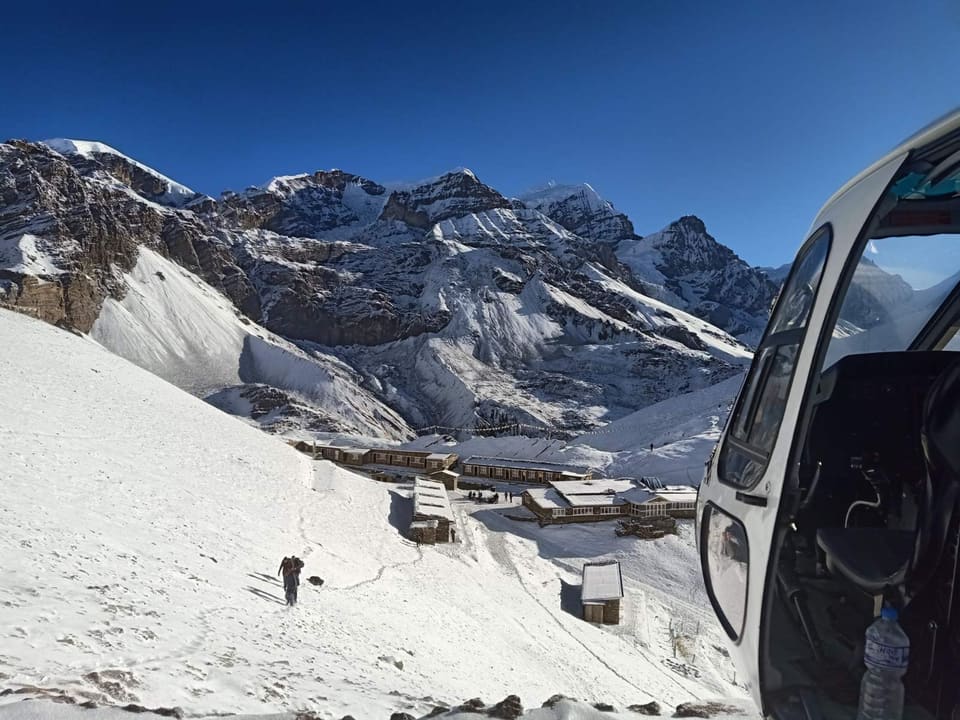
Everest Base Camp Trek with Helicopter Return
Walk up to Everest Base Camp the classic way, with time to acclimatise, then skip the four-day walk back down. After sunrise on Kala Patthar, a helicopter flies you from Gorak Shep straight to Kathmandu.
from US$2,450per person
 11 days▲ 5,357 m
Lukla – Namche – Gokyo – Gokyo Ri
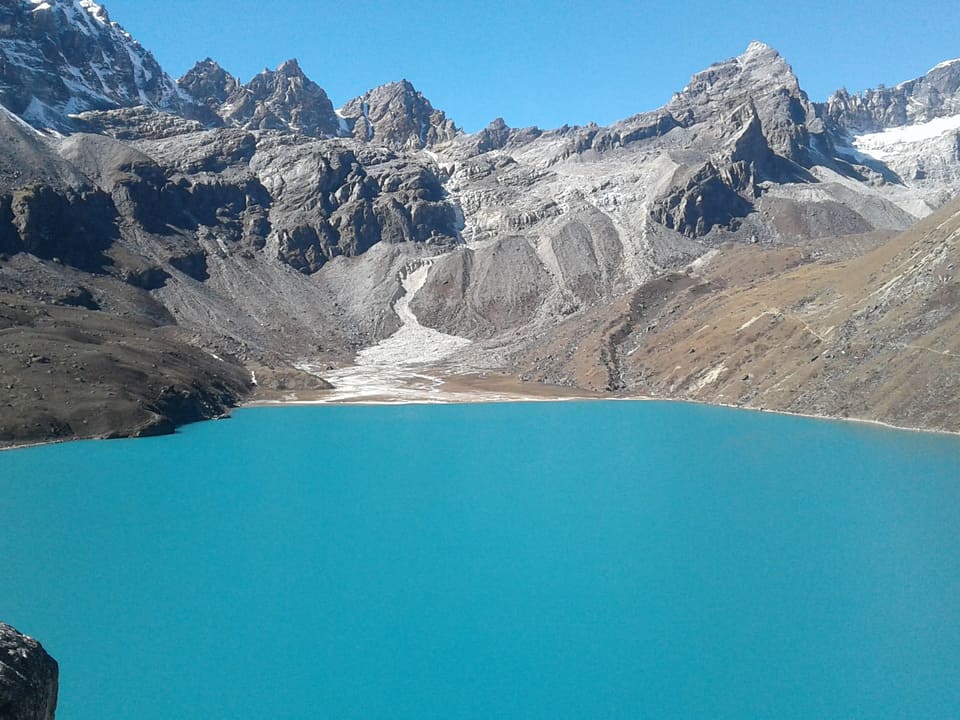
Gokyo Lakes Trek with Helicopter Return
The quieter side of the Everest region, with turquoise glacial lakes, the Ngozumpa Glacier and, from Gokyo Ri, four of the world's six highest mountains in a single view. Walk in, then fly out from Gokyo over the glacier.
from US$2,350per person
 10 days▲ 4,130 m
Pokhara – Ghandruk – Chhomrong – Annapurna Base Camp
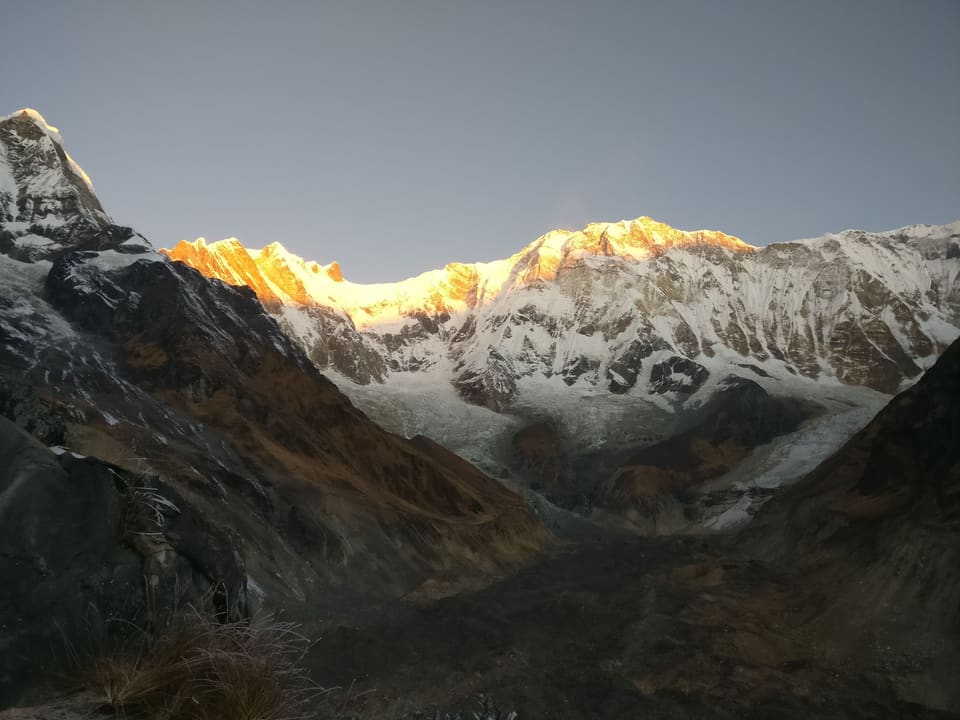
Annapurna Base Camp Trek with Helicopter Return
Trek up through rhododendron forest and Gurung villages to the Annapurna Sanctuary, spend a night at Annapurna Base Camp (4,130 m) and see dawn break over the peaks. Then it's just twenty minutes by air back to Pokhara.
from US$1,690per person


